Rome vs Florence: Which to Visit First?
Choosing between Rome and Florence? Compare art, food, costs, and atmosphere to decide which Italian city to visit first in 2026.
Key Takeaways
- ✓Rome has more variety: ancient ruins, Renaissance art, Vatican City, and vibrant neighbourhoods
- ✓Florence is more intimate, walkable, and focused, perfect for art and Tuscan food lovers
- ✓Rome needs 4 to 5 days minimum; Florence can be covered in 2 to 3 days
- ✓Both are connected by 90-minute high-speed trains, making a combined trip easy
Ready to book your stay in Rome?
Compare hundreds of hotels. Bundle with flights for extra savings.
Cost Comparison: Rome vs Florence
| Category | Rome | Florence |
|---|---|---|
| Budget hotel | £60 to £90/night | £55 to £85/night |
| Mid-range hotel | £120 to £220/night | £100 to £200/night |
| Meal at trattoria | £12 to £18 | £12 to £20 |
| Coffee | £1.20 | £1.20 |
| Gelato | £2.50 to £4 | £2.50 to £4 |
| Major museum | £14 to £20 | £12 to £25 |
Verdict: Prices are very similar. Florence is marginally cheaper for accommodation but can be pricier for restaurants in the tourist centre. Both cities are mid-range by European standards.

Rome
Art and Culture
Rome spans 2,500 years of history. You can see ancient Roman ruins (Colosseum, Forum, Pantheon), Renaissance masterpieces (Sistine Chapel), Baroque churches (hundreds of them), and modern street art in Ostiense, all in the same day. Vatican City adds another dimension entirely. The sheer volume of art and history is staggering.
Florence is the birthplace of the Renaissance, and its art is more concentrated and focused. The Uffizi Gallery (Botticelli's Birth of Venus, Leonardo's Annunciation), the Accademia (Michelangelo's David), and the Duomo are all within a 15-minute walk. The Pitti Palace and Boboli Gardens add Medici grandeur.
Choose Rome if: You want variety: ancient, Renaissance, Baroque, and modern art spanning millennia.
Choose Florence if: You want a deep dive into the Renaissance in an intimate, walkable setting.
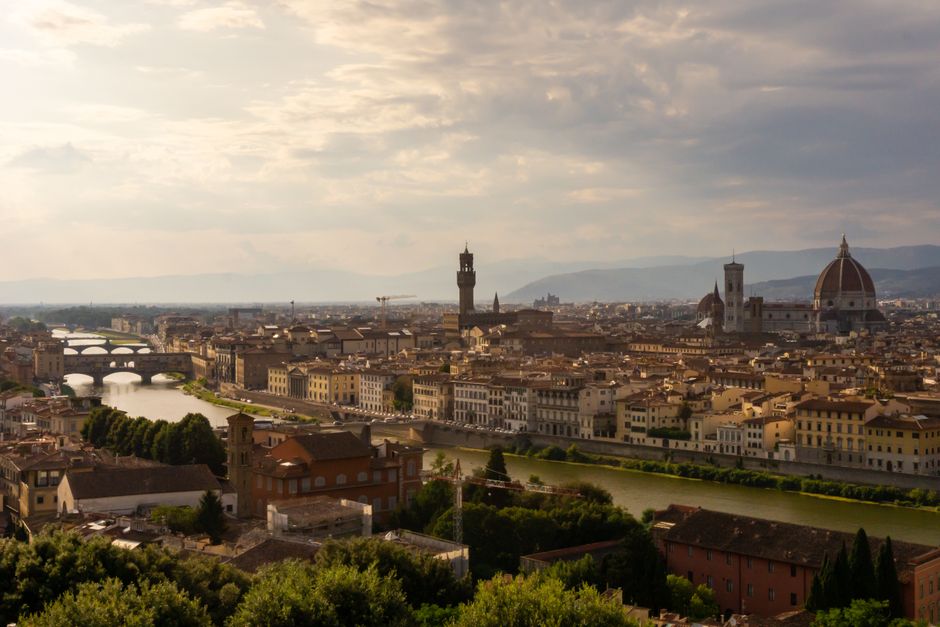
Florence
Food: Roman vs Tuscan Cuisine
Roman cuisine is hearty and flavourful. The four classic Roman pastas (carbonara, cacio e pepe, amatriciana, and gricia) are essential eating. Supplì (fried rice balls), Roman-style pizza (thin and crispy), and carciofi alla giudia (Jewish-style fried artichokes) are all must-tries. Testaccio and Trastevere are the best food neighbourhoods.
Tuscan cuisine centres on simplicity and quality ingredients. Bistecca alla fiorentina (a massive T-bone steak), ribollita (bread soup), pappardelle al cinghiale (wild boar pasta), and lampredotto (tripe sandwich from street carts) are Florence's signature dishes. The wines are outstanding; Chianti, Brunello di Montalcino, and Super Tuscans are all from the surrounding region.
Choose Rome if: You want pasta-focused cuisine, diverse neighbourhoods, and a wider restaurant scene.
Choose Florence if: You want steak, Tuscan wine, and a food culture deeply connected to the surrounding countryside.
Get the Full Florence Guide
Neighbourhood picks, hidden gems, and deals for Florence straight to your inbox.
No spam. Unsubscribe anytime.
Atmosphere and Walkability
Florence is extraordinarily compact. You can walk from one side of the historic centre to the other in 20 minutes. This makes it feel intimate and manageable. The architecture is consistent (Renaissance stone and terracotta), and the city has a unified aesthetic that photographs beautifully. The downside is that central Florence can feel crowded and overtouristed, especially in summer.
Rome is sprawling and chaotic. It takes time to understand the city's layout, and you will need public transport (or a lot of walking) to cover the main sights. But Rome rewards exploration: turn a corner and discover a hidden piazza, a neighbourhood trattoria, or a church with a Caravaggio painting that would be the centrepiece of any other city's museum.
Choose Florence if: You prefer a compact, walkable city with a unified atmosphere.
Choose Rome if: You enjoy discovery, variety, and a city that reveals its treasures gradually.
Day Trip Potential
Florence is the superior base for day trips. Tuscany's hill towns (Siena, San Gimignano, Lucca), wine regions (Chianti, Montalcino), and the coast (Cinque Terre, 2.5 hours) are all reachable by train or bus.
Rome's day trip options include Pompeii (2 hours by train), Tivoli (Villa d'Este and Hadrian's Villa, 45 minutes), Orvieto (1 hour), and the Amalfi Coast (though this is better as an overnight trip).
Choose Florence if: Tuscan countryside, wine tasting, and hill town exploration are priorities.
Choose Rome if: You want to see Pompeii or the Amalfi Coast from your base city.
The Verdict: Rome or Florence?
Choose Rome if:
- This is your first trip to Italy
- You want the widest range of experiences (ancient, religious, culinary, neighbourhood)
- You have 4+ days
- You enjoy big, bustling cities
- Vatican City is on your bucket list
Choose Florence if:
- You are a Renaissance art enthusiast
- You want Tuscan wine and countryside day trips
- You prefer a compact, walkable city
- You have 2 to 3 days
- You have already been to Rome
Best option: Visit both. The Frecciarossa high-speed train connects Rome and Florence in 90 minutes. Spend 4 to 5 days in Rome and 2 to 3 days in Florence for the perfect Italian trip.
Find the perfect hotel for your trip
Compare prices across thousands of hotels on Expedia. Bundle with flights for extra savings.
Search Hotels on ExpediaWe earn a small commission if you book through this link, at no extra cost to you.
Explore These Destinations
Frequently Asked Questions
Should I visit Rome or Florence first?
How long does it take to travel from Rome to Florence?
Is Rome or Florence cheaper?
Which city has better food?
Can I do Rome and Florence in one week?
Book tours and experiences worldwide
Skip-the-line tickets, guided tours, and unique experiences in hundreds of cities.
Browse Tours on GetYourGuideWe earn a small commission if you book through this link, at no extra cost to you.